


















 The FPS service
What is FPS?
From 1ster january 2018, the decentralization of paid parking will come into effect: if a motorist does not pay their parking charge, they will no longer be penalized by a fine but must instead pay a fee called "forfait de post-stationnement" or FPS.
In this new system, all local authorities who have introduced paid parking are invited to sign an agreement with the ANTAI. They have the choice between two agreements:
- The agreement "partial cycle": the ANTAI is invested by law with the exclusive responsibility for issuing both execution orders in the event of non-payment of the FPS and cancellation orders. The agreement "partial cycle" describes the terms and conditions to be observed when corresponding with the ANTAI to allow the issuing of execution and cancellation orders. This agreement must be signed by a person empowered to legally bind the authority.
- The agreement "full cycle": the ANTAI proposes to local authorities to serve FPS payment notices on their behalf. This service is optional.To access it, the authorities must sign the "full cycle" agreement which describes the terms and conditions and commitments to be observed when corresponding with the ANTAI for it to send out the FPS payment notices. An authority that chooses the full cycle does not need to sign the "partial cycle" agreement. The "full cycle" agreement must be signed by a person empowered to legally bind the authority.
The ANTAI's FPS service
Appointed by law to issue execution orders, the Agence Nationale de Traitement Automatisé des Infractions (ANTAI) proposes to serve FPS payment notices on behalf of authorities to users who do not pay their parking charge.
The following video outlines this new ANTAI service:
Since the reform
was implemented,
ANTAI has issued:
In 2018
million post-parking fee payment notices
In 2019
million post-parking fee payment notices
In 2020
health crisis
million post-parking fee payment notices
In 2021
million post-parking fee payment notices
en 2022
million post-parking fee payment notices
In 2023
million post-parking fee payment notices
In 2024
million post-parking fee payment notices
Specifically, the law (Article L2333-87 of the French General Code of Local Authorities) states two ways of notifying a post-parking fee notice:
- either the notice is left on the vehicle's windscreen
- or it is posted to the address of the holder of the vehicle registration certificate (applicable only to vehicles registered in France).
Implementing post-parking fees in your local authority area requires signing a formal agreement with ANTAI detailing the respective obligations of each party according to the level of service opted for.
There are two options to choose from when entering into this formal agreement:
The "full cycle" agreement
This is the option chosen by approximately 99% of local authorities that have decided to implement post-parking fees within their area. Under this agreement, the following functions are delegated to ANTAI:
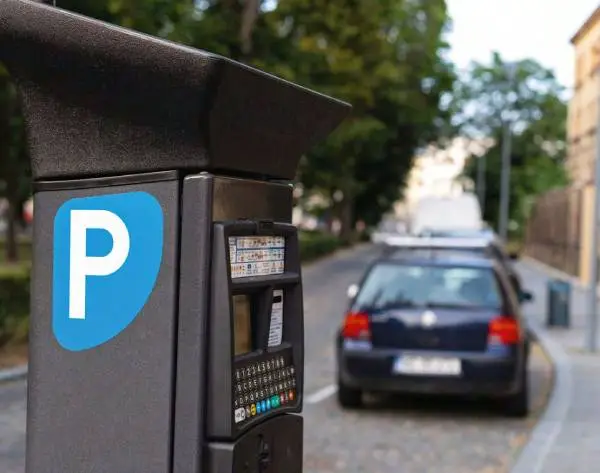
- printing and posting payment notices to an offender's home address, obtained from the vehicle registration system (SIV), to which ANTAI has legal access for this purpose;
- deploying a multi-channel framework, via a delegation from the French Directorate General of Public Finances, enabling the Public Treasury to collect payments at the reduced, standard or increased rate through various payment methods (e.g. credit card, interactive voice server, etc.), before transferring the amounts collected to each local authority on a monthly basis;
- introducing a reduced rate, which can be managed either by ANTAI's aforementioned information system, or independently by the local authority itself before the post-parking fee case file is forwarded to ANTAI;
- issuing an enforcement order and referring the case file to the relevant local Public Treasury for debt collection, with an additional penalty payable to the State.
Note: the services included in this option are invoiced to local authorities at cost price, with no profit margin applied.
The ‘partial cycle’ agreement
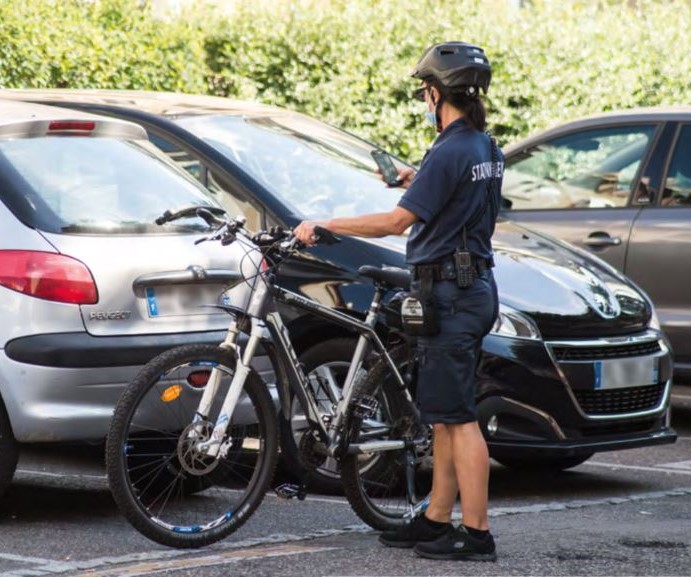
If a local authority decides to handle the issuing of notices and payment collection itself during the initial phase, it must still use ANTAI's services to start the procedure for recovering any outstanding post-parking fees once the legal payment deadline has expired.
This is therefore the mandatory minimum agreement required if the full-cycle option is not chosen.
ANTAI is the only entity authorised to issue:
- enforcement orders to the Public Treasury if post-parking fees remain unpaid (the Public Treasury is then responsible for sending reminder notices to the liable parties concerned (Article L2323-7-1 of the French General Code of Public Property));
- cancellation orders, upon instruction from the local authority if an obligatory prior administrative appeal is upheld, or to comply with a ruling made by the Paid Parking Disputes Commission.
In addition, the payment facilities managed by ANTAI on behalf of the French Directorate General of Public Finances allow liable parties to voluntarily pay the increased rate of the post-parking fee before the Public Treasury accountant begins litigation.
Note that this option is provided free of charge to the local authority.
What is the process for subscribing to the service?
Local authorities who want to implement paid parking within their jurisdiction must sign an agreement with ANTAI specifying the chosen cycle. This agreement remains valid until 31 December 2026, and can be renewed at a later date.
The partnership agreement procedure is almost entirely paperless and can be accessed by visiting the ANTAI partners' portal. It follows the main steps outlined below:
| If you already have an account because you are subscribed to another service (e.g. e-ticketing or vehicle impound), log in to it: | If you do not already have an account, create one, and once it has been validated: |
|---|---|
| 1: Download the agreement pre-signed by the Director of ANTAI that corresponds to your chosen option: ‘full cycle’ or ‘partial cycle’. | |
| 2: Fill in the agreement, which must be signed by an authorised representative of the local authority, and upload it to the partners' portal. Once uploaded, ANTAI's post-parking fee department will validate the agreement, checking that all required fields have been filled in correctly, and contacting you if necessary. | |
| 3: Customise your post-parking fee payment notices (APA) by uploading your logo (mandatory) and, if applicable, a personalised information page if you apply a reduced rate. | |
| 4: At the same time, contact either a software provider offering a ready-made post-parking fee solution for local authorities, or build your own system using the functional and technical specifications supplied by ANTAI, in order to ensure data exchange with the latter. | |
| 5: Obtain a "one star" General Security Framework certificate in order to secure IT exchanges with ANTAI, and have your software provider or technical department send it to ANTAI's IT department. | |
| 6: Activate the electronic certificate via your account area to start effective data exchange. | |
IMPORTANT
Regardless of which cycle you choose, the appeals process for payment notices remains the direct responsibility of the local authority, as part of the compulsory prior administrative appeal (RAPO), and, where applicable, cases brought before the Paid Parking Disputes Commission.
Each local authority is therefore responsible for specifying the precise terms and conditions for exercising this right of appeal of post-parking fee payment notices – whether ANTAI prints them on the authority's behalf (full cycle), or the authority prints them at its own expense (partial cycle) – and for complying with all necessary obligations required by the General Regulation on the Protection of Personal Data (GDPR) and by the French Data Protection Act.
Please note that liable parties may contact the ANTAI call centre for general, non-personalised advice if they have any difficulty understanding your appeals procedure or in using the online payment services.
Thanks to the ANTAI's access to the vehicle registration system, payment notices will be sent reliably and safely to the residence of the person who is liable to pay.
They may be sent several days after the failure to pay is reported, to allow local authorities to establish a reduced FPS.
If they have questions, persons liable to pay will be guided through their procedures by the ANTAI call centre advisors.
This service is charged back to the local authorities at full cost, with no profit margin. It follows on from electronic ticketing, in partnership with the Direction Générale des Finances Publiques.
What's the timeline?
Starting from 1st er April 2017, local authorities can download the agreement that will join them to the ANTAI by accessing the following page: Adopting electronic ticketing
From June 2017, authorities can create an "reserved space" FPS on the ANTAI website to upload their signed agreement and carry out all of their procedures there.