



















 Electronic tickets
What is an electronic ticket?
Electronic tickets, introduced in mid-2009, enable authorised officials to issue fines for offences, directly in digital format. A fixed penalty notice or a fixed fine for a misdemeanour notice is sent by the National Processing Centre in Rennes by post to the offender's home or, since 2018, by email, in order to reduce the environmental impact of document processing and simplify the process for those interested in using digital services (advantages of speed and digital accessibility), thereby enabling them to benefit from reduced rates even when away from home.
The process is seeing a gradual expansion of which proceedings can be handled electronically, and now includes:
- recording of the ticket;
- issuing of the fixed penalty notice or fixed fine for a misdemeanour notice;
- immediate or differed payment of fines;
- the option to appeal against the offence (excluding increased fines).
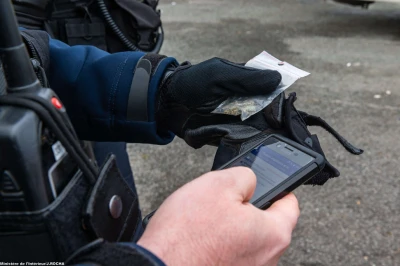
Electronic tickets replace the traditional handwritten paper ticket (specifically the letter-card on which a penalty stamp was affixed) for contraventions that fall under a fixed fine procedure, including: improper parking (e.g. prolonged, obstructive, very obstructive, or hazardous parking), right-of-way violations, wrong-way driving, speeding, environmental offences, etc.).
Where offences have been designated by law as payable by fixed fine, an electronic ticket can replace standard penal proceedings with a fine, thereby helping to strengthen justice system response by significantly reducing the workload of French criminal courts.
However, since 1st January 2018, this no longer applies to non-payment of on-street public parking, which has since been reclassified as a charge for occupying the public domain, a charge that is implemented by local authorities and which comes under the post-parking fee (FPS) procedure.
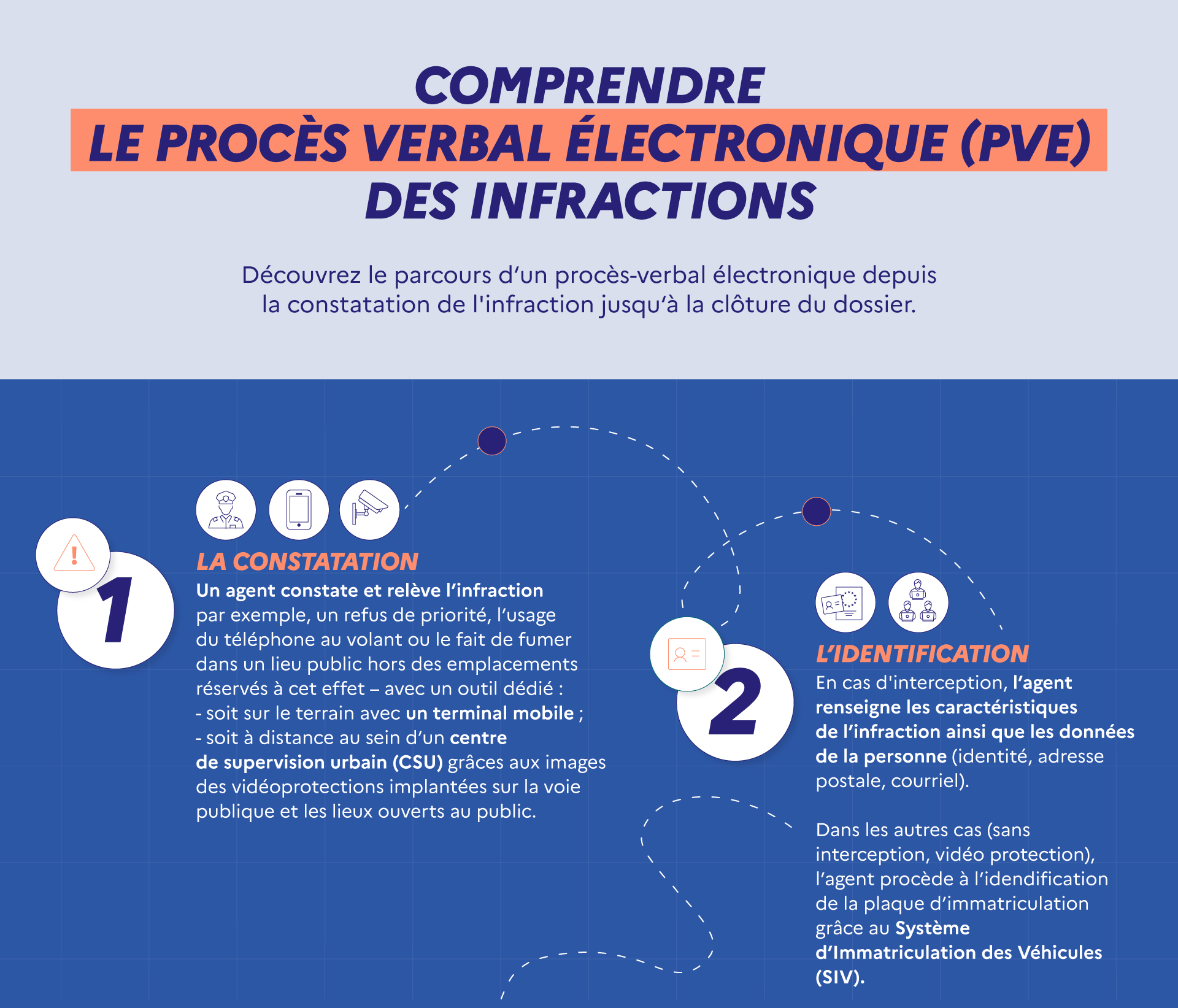
The equipment used for electronic ticketing is as follows:
- handheld digital devices (smartphone or tablet)
- standard computer workstations, located in secure premises, used in particular by centres carrying out video-based enforcement.
Which officials issue fines?
The PVe system is currently used by all departments of the French National Police and the Gendarmerie, as well as by all municipal and/or rural police forces in municipalities with a population of over 7,500.
They are also being increasingly adopted by other public or private bodies whose staff are authorised by law or regulation to issue fines, such as the departments of the French Ministry of Infrastructure responsible for monitoring road hauliers, public passenger transport operators (Transdev, SNCF, etc.) and the various departments responsible for environmental enforcement.
It should be noted that only officers of the French National Police and the Gendarmerie are authorised to record offences under the fixed fine for a misdemeanour procedure.
IMPORTANT
When issuing fines for criminal offences, enforcement officers never leave anonymous offence notices containing a QR code linking to a payment site on vehicle windscreens. You should have no doubt that notices such as these are fraudulent, and you should report them to the police.
Legitimate QR codes appear only on the fixed penalty notices sent out by ANTAI, and can be scanned using the Amendes.gouv mobile application, the Amendes.gouv.fr website, or at the payment terminals of approved partners such as newsagents. If you consent to an immediate payment procedure, a certified enforcement officer issuing a ticket may also present you with a QR code on their mobile phone during a roadside stop.
Legitimate QR codes always open the official online payment portal amendes.gouv.fr (or its equivalent stationnement.gouv.fr if you have to pay a post-parking fee), and are designed to only work with these two websites, making it easier to enter details from the notice onto the web page. If you are redirected to another website, this constitutes attempted fraud and should be reported to the police, or at www.33700.fr (French only)